
Македонски
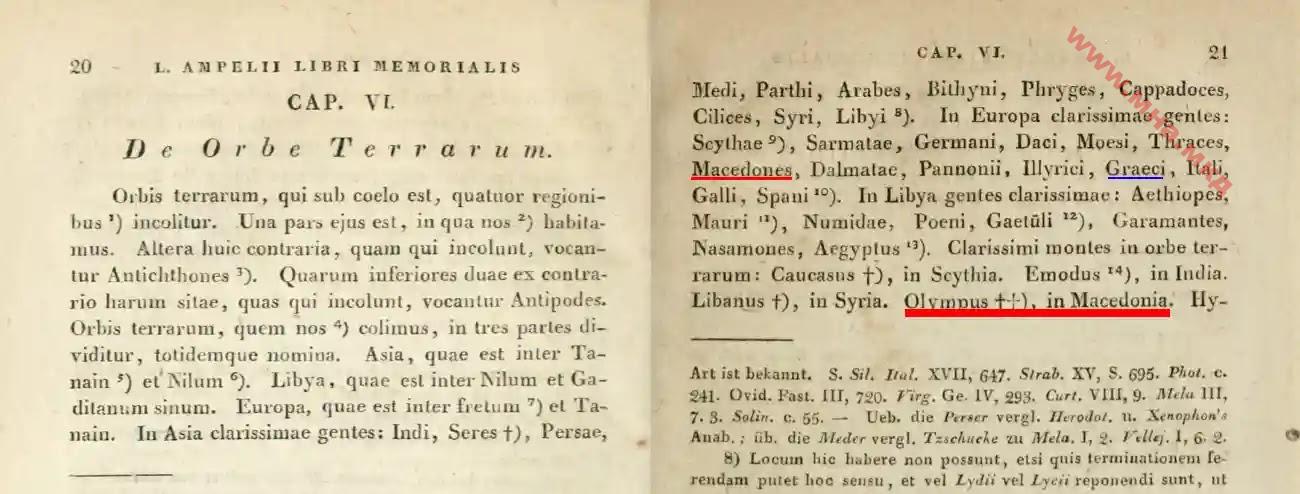
„… Во Европа, најпознати народи се: Скитите, Сарматите, Германците, Даките, Мизијците, Тракијците, Македонците, Далматинците, Панонците, Илирите, Грците, Италијанците, Галите и Шпанците. Во Либија, најпознати народи се: Етиопјаните, Маврите, Нумидијците, Феникијците, Гаетулијаните, Гарамантите, Назамоните и Египќаните. …“
English
„… In Europe, the most famous peoples are: the Scythians, the Sarmatians, the Germans, the Dacians, the Moesians, the Thracians, the Macedonians, the Dalmatians, the Pannonians, the Illyrians, the Greeks, the Italians, the Gauls, and the Spanish. In Libya, the most famous peoples are: the Ethiopians, the Moors, the Numidians, the Phoenicians, the Gaetulians, the Garamantes, the Nasamones, and the Egyptians. …“
Македонски
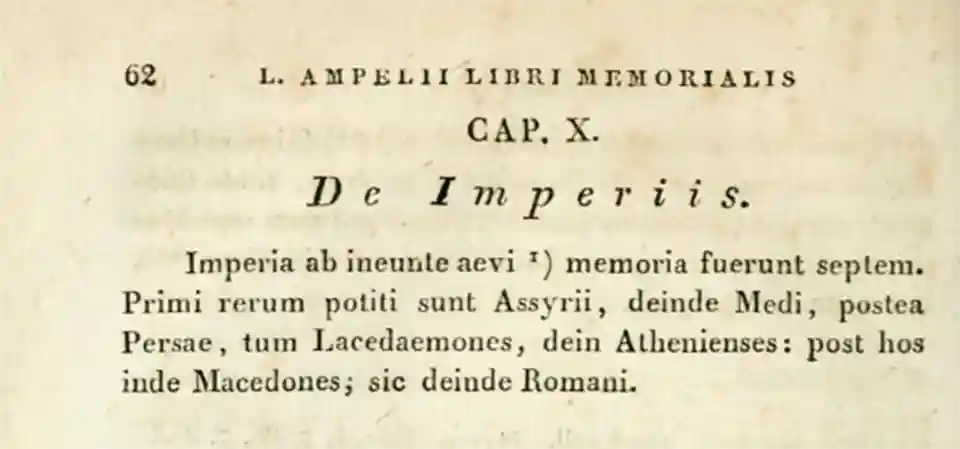
„… Од почетокот на памтењето на времето, досега имало седум царства. Првите кои биле главни во водењето на нештата биле Асирците, потоа Медејците, после тоа Персијанците, потоа Лакадаемонците, потоа Атињаните, после кои дојдоа Македонците, а потоа Римјаните. …“
English
„… From the beginning of the memory of time, there have been seven empires. The first who were in charge of things were the Assyrians, then the Medians, after that, the Persians, then the Lacedaemonians, then the Athenians, after whom came the Macedonians, and then the Romans. …“
Македонски
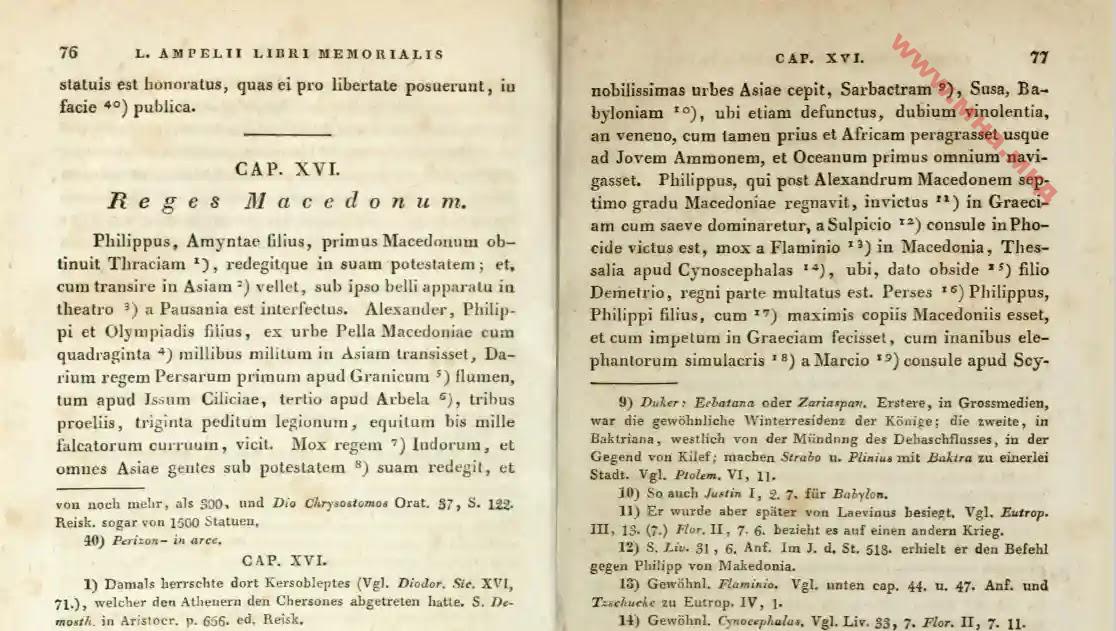
„… Кралеви на Македонија
- Филип II, син на Аминта IV, бил првиот од Македонците кој ја грабнал Тракија и ја ставил под своја контрола; и сакал да премине во Азија, но баш во средината на подготовките за оваа војна тој бил убиен во театарот од Паузаниј.
- Александар III, син на Филип II и Олимпија, тргнал од Пела во Македонија со 40,000 војници, преминал во Азија и го победил персискиот крал Дариј, прво реката Граник, потоа кај Ис во Киликија, а трет пат кај Арбела – во три битки тој победил триста илјади пешадија, педесет илјади коњаница, две илјади коси кочии. Набрзо ги ставил индискиот крал и народите од Азија под свое владение и ги освоил најблагородните градови во Азија: Сард, Бактра, Суса, Бавилон. Тој починал во последниот од нив (нејасно дали од прекумерно пиење или од отров), иако пред тоа патувал низ Африка сѐ до Јупитер Амон и станал првиот од сите луѓе кој морнарел по Океан.
- Филип V, кој владеел со Македонија седми поред после Александар III, ја нападнал Грција и владеел со неа дивјачки сѐ додека не бил поразен од Сулпициј, конзулот во Фокис, потоа од Фалминиј во [Македонија] Тесалија кај Киноскефала, каде што откако го дал својот син Деметриј како заложник, му бил одземен дел од неговото кралство.
- Персеј, син на Филп V, со бројни македонски војски извршил напад на Грција, бил поразен со празни модели на слонови од Марциј конзулот на Аскириското Мочуриште, го фрлил своето богатство во морето и избегал; набрзо бил протеран од Македонија од Емилиј Паулус и побарал азил во Самотракија. Од таму, после ветувањата кои ги дал, тој се предал себе си на Паулус, во триумф бил воден пред кочијата, а потоа остарел во слободен притвор во Албанус.
- Лажниот-Филип бил обичен и изопачен човек, кој го користел својот сличен изглед како Филип V за да ги убеди луѓето дека тој бил негов син и ги повел Македонците во војна, но кога избиле немири, бил заробен и испратен под стража во Рим, каде што избегал од притворот, повторно ја дигнал Македонија и ја однел во војна со Тракија. Во тврдина во кралството, облечен во воена наметка, тој изрекувал судски пресуди. Наскоро бил поразен од Кекилиј Метел во масовна битка и избегал во Тракија, но бил предаден од кралевите и бил однесен за триумфот.
…
Паулус, кој ја освоил Македонија, ја ослободил Грција и се вратил во најраскошен триумф, кога ги изгубил своите синови во текот на деновите од самиот триумф, јавно рекол дека е благодарен на судбината, бидејќи подобро е што го нападнала неговиот дом, отколку Републиката. …“
English
„… Kings of the Macedonians
- Philip II, son of Amyntas IV, was the first of the Macedonians to grab Thrace and place it under his own control; and he wanted to cross over to Asia, but right in the midst of the preparations for this war he was killed in the theatre by Pausanias.
- Alexander III, son of Philip II and Olympias, set out from Pella in Macedon with 40,000 soldiers, crossed over into Asia and defeated King Darius of the Persians, first at the River Granicus, then at Issus in Cilicia, and a third time at Arbela – in three battles he defeated three hundred thousand infantry, fifty thousand cavalry, two thousand scythed chariots. He soon brought the king of the Indians and all the peoples of Asia under his control and captured the most noble cities of Asia: Sardes, Bactra, Susa, Babylonia. At the last of these he died (whether from excessive drinking or from poison is unclear), although before that he had travelled through Africa all the way to Jupiter Ammon and become the first of all men to sail on the Ocean.
- Philip V, who reigned over Macedonia in the seventh place after Alexander III, invaded Greece and ruled it savagely until he was defeated by Sulpicius the consul in Phocis, then by Flaminius in [Macedonia] Thessaly at Cynoscephalae, where having given his son Demetrius as a hostage he was stripped of part of his kingdom.
- Perses, son of Philip V, with massive Macedonian armies and when he had made an attack on Greece, was defeated with empty models of elephants by Marcius the consul at the Ascyris Marsh, threw his treasure into the sea and fled; soon he was been chased from Macedonia altogether by Aemilius Paulus and sought asylum on Samothrace. From there, after promises had been made, he surrendered himself to Paulus, was led before his chariot in a triumph and then grew old in free custody at Albanus.
- Pseudo-Philip was a commoner and a degenerate man, who used his similar appearance to Philip V to persuade people that he was his son and led the Macedonians in war, but as disorder broke out, he was captured and sent under guard to Rome, where he escaped from custody, roused up Macedonia again and took the war to Thrace. In the citadel of the kingdom, dressed in a military cloak, he gave legal judgements. Soon he was defeated by Caecilius Metellus in a massive battle and fled into Thrace, but he was betrayed by the kings and taken away for the triumph.
…
Paulus, who had conquered Macedonia, freed Greece and brought back the most opulent triumph, when he lost his two sons during the very days of the triumph, but said publicly that he was grateful to fate, because it had attacked his own house rather than the Republic. …“
Посочиле: Macedonia History
